
Linen Shower Curtain
Replaces: PVC Shower Curtain
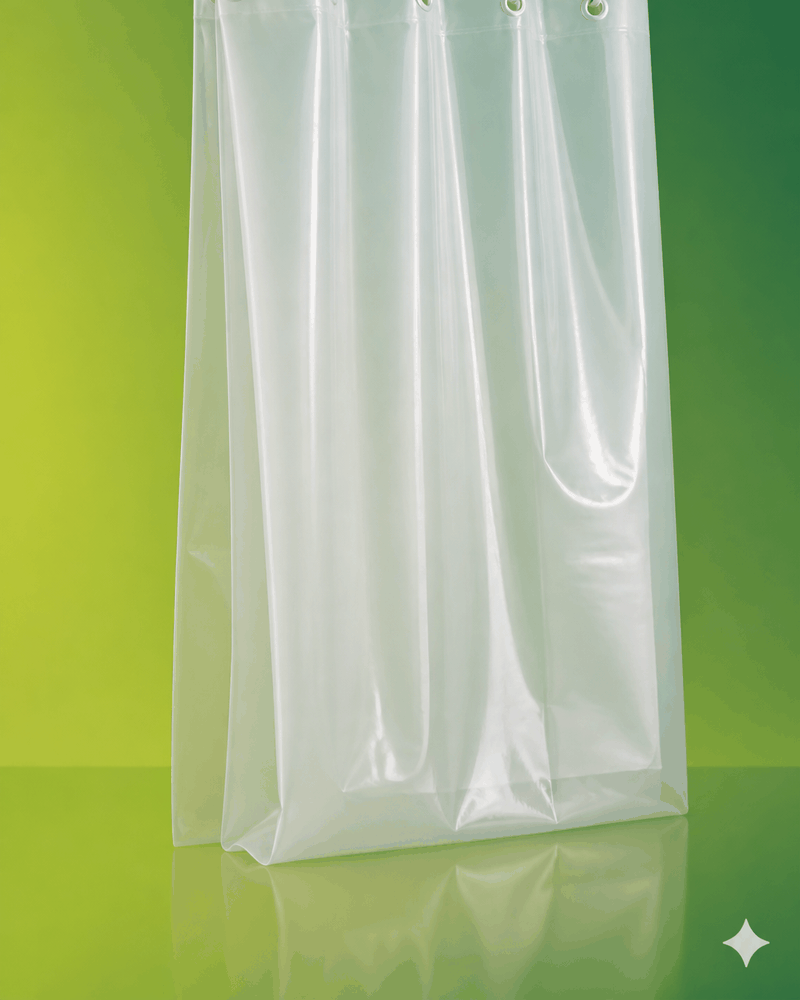 The Problem
 PVC Shower Curtain
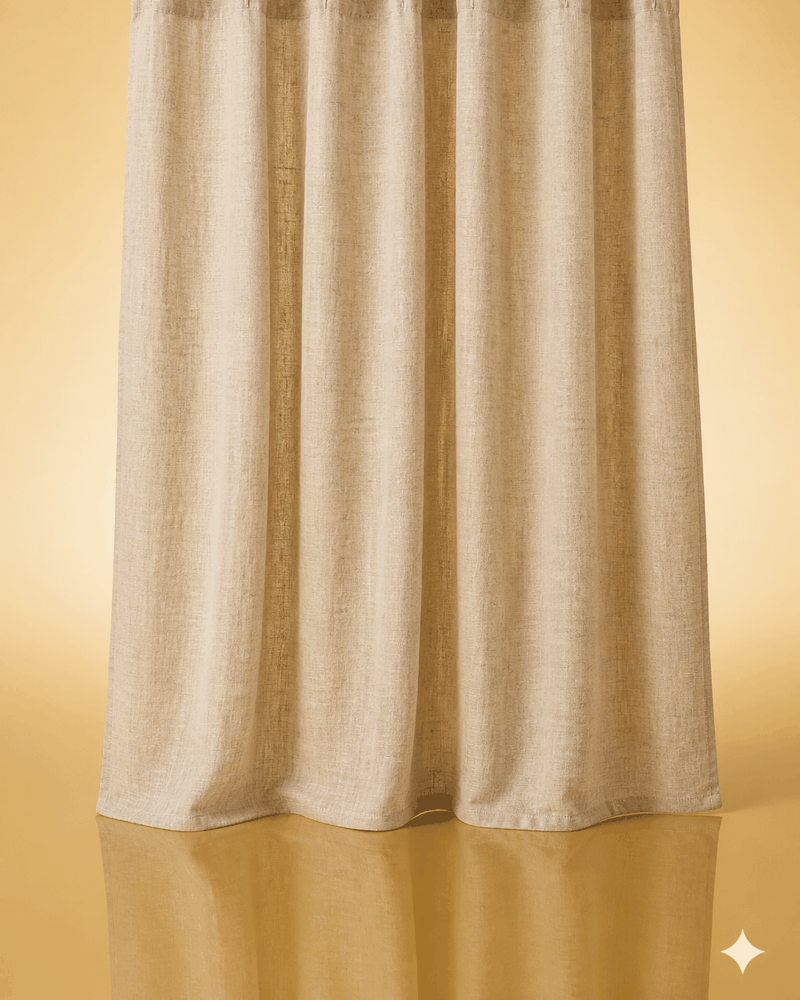 The Solution
 Linen Shower Curtain
Linen Shower Curtain
Replaces: PVC Shower Curtain
Shop Now →Why Switch?
Unroll a vinyl shower curtain and the smell hits you immediately. That smell is the product. Testing by the Center for Health, Environment & Justice identified over 100 volatile organic compounds released by new PVC shower curtains, with emissions still measurable more than a month after unwrapping. Several exceeded levels that indoor air quality guidelines consider acceptable.
PVC is rigid on its own, so a curtain that drapes has to be roughly a third plasticiser by weight — usually phthalates such as DEHP, plus organotin stabilisers. Those plasticisers are not bonded into the polymer, so they steadily migrate out into air and settle into household dust. A bathroom is the worst possible venue for this: it is small, it has poor ventilation, and you fill it with hot steam twice a day, which accelerates off-gassing exactly while you are standing there breathing deeply.
The health associations are consistent. A nested case-control study in Environmental Health Perspectives found that phthalate concentrations in house dust were associated with asthma and allergic symptoms in children, and a systematic review and meta-analysis in the same journal found that exposure to phthalates from PVC products was associated with the development of asthma and allergies. A later systematic review in Environment International found consistent evidence linking phthalate exposure to adverse male reproductive outcomes.
What Makes It Better
Linen has no plasticiser because it needs none — it drapes on its own. It is flax fibre, and there is nothing in it that wants to evaporate into your bathroom. Your bathroom simply stops smelling like plastic.
Linen also happens to be unusually well suited to the job. It is one of the most moisture-wicking and fast-drying natural fibres, and it has genuine antibacterial and antifungal properties, so it resists the mildew that colonises the folds of a vinyl curtain. It gets softer with every wash rather than stiffening and cracking, and it machine washes, which vinyl does not really survive. A good linen curtain lasts many years against the one to two years of a vinyl one that yellows, goes brittle, and grows mould along the hem.
Honest Caveats
Linen is not waterproof, so you need either a wide enough tub or a liner. If you use a liner, choose EVA, PEVA, polyester, or nylon rather than PVC — and note that PEVA, while an improvement, is still a plastic with its own emissions. The genuinely best setup is a linen curtain with a hemmed weighted edge, or a linen curtain paired with a glass screen. Linen also costs meaningfully more up front and wrinkles readily, which most people come to like. Whatever you pick, wash it periodically and leave it spread out rather than bunched so it can dry.
Key Benefits
- No plasticisers or organotins off-gassing into a small, humid room
- Eliminates the 100-plus VOCs measured from new vinyl curtains
- Naturally antibacterial and fast-drying, so it resists mildew
- Machine washable, and softens rather than cracks with age
- Lasts many years instead of one to two
- Biodegradable flax fibre at end of life
The Research
- Center for Health, Environment & Justice (2008). “Volatile Vinyl: The New Shower Curtain’s Chemical Smell.”
- Bornehag C.G., Sundell J., Weschler C.J., et al. (2004). “The association between asthma and allergic symptoms in children and phthalates in house dust: a nested case-control study.” Environmental Health Perspectives.
- Jaakkola J.J.K., Knight T.L. (2008). “The role of exposure to phthalates from polyvinyl chloride products in the development of asthma and allergies: a systematic review and meta-analysis.” Environmental Health Perspectives.
- Schettler T. (2006). “Human exposure to phthalates via consumer products.” International Journal of Andrology.
- Radke E.G., Braun J.M., Meeker J.D., Cooper G.S. (2018). “Phthalate exposure and male reproductive outcomes: A systematic review of the human epidemiological evidence.” Environment International.