
Laundry
Most laundry and cleaning products contain a cocktail of unregulated chemicals — and every wash cycle sheds microplastic fibres straight into your home and waterways.
Top tips.
Around 35% of microplastics in the ocean come from synthetic fibres shed during washing. A few habit changes can significantly reduce what leaves your laundry room.
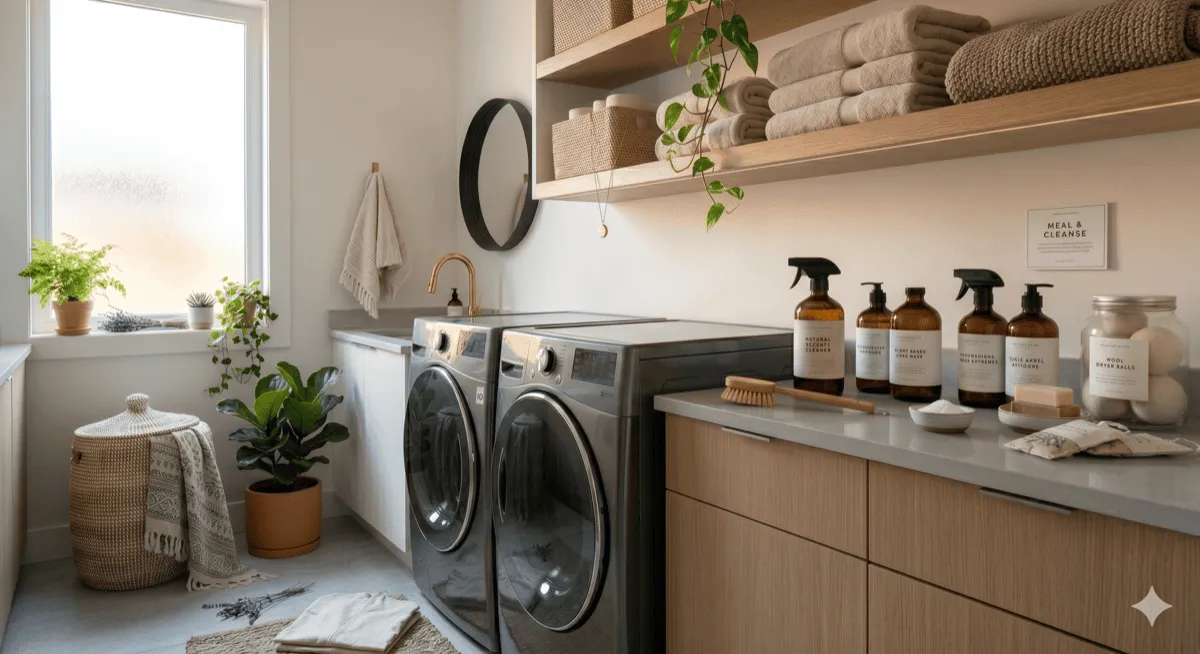
- Go Fragrance-Free — Replace scented pods and liquid detergents with fragrance-free tablets, powders, or liquids. "Fragrance" on a label can mask dozens of undisclosed chemicals, including phthalates.
- Wash Cold & Short — Hot water and long cycles accelerate microfibre shedding and the release of chemicals from synthetic fabrics. A cool, shorter wash is better for your clothes and your body.
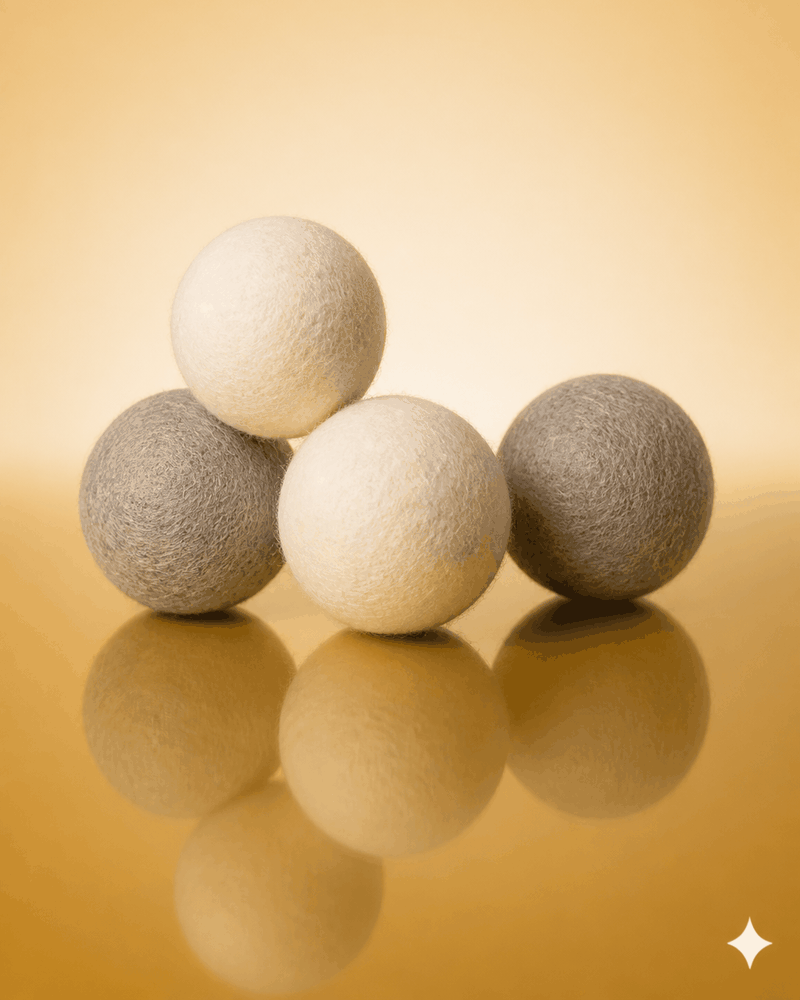
- Switch to Wool Dryer Balls — Dryer sheets are heat-activated carriers of synthetic fragrance and plastic-based softening agents that melt onto your laundry and linger on your skin. Wool balls soften naturally, with zero chemicals.
- Use White Vinegar Instead of Softener — A cheap, effective, and completely natural fabric softener. It removes detergent residue, neutralises odours, and contains none of the chemical coating agents found in commercial softeners.
- Swap the Sponge for Natural Tools — Plastic sponges and synthetic scrubbing pads shed microplastics with every use. Wooden brushes with natural bristles or reusable cotton rags clean just as well and last far longer.
- Choose Concentrate or Refillable Cleaners — Concentrated or refill-system household cleaners deliver the same cleaning power with a fraction of the plastic packaging waste.
- Reach for Baking Soda — A gentle, natural abrasive that tackles odours and stains without any of the synthetic chemicals or plastic packaging of conventional multi-surface cleaners.
The worst offenders
Learn which laundry products carry the heaviest chemical load.
Detergent
Plastic-Wrapped Pods, Scented Detergents, Freshness Boosters
Liquid and powder detergents leave chemical residues on fabrics, increasing daily skin contact and low-level inhalation. Laundry pods — often wrapped in PVA plastic film — are highly concentrated and can leave stronger residues, especially in cold or quick wash cycles. Strong scents hide behind the word "fragrance," which can represent dozens of individual chemicals.
Additives
Fabric Softeners, Dryer Sheets
Fabric softeners coat your clothes in a chemical film — often containing plastic-based compounds and synthetic fragrance — that stays on fibres and transfers to skin all day. Dryer sheets go a step further: when heated, plastic-based softening agents melt onto your laundry, linger in indoor air long after the cycle ends, and accumulate with every wear.
Household Cleaners
Antibacterial, Germ & Odour Eliminators
Products claiming to "kill 99.9% of germs" typically stack multiple active chemicals alongside synthetic fragrance — increasing the cumulative load in your home without providing meaningful extra cleanliness over ordinary soap and water. Many of these ingredients, including quaternary ammonium compounds, are linked to respiratory irritation and potential hormone disruption and are not required to be fully disclosed on labels.
Labels
Watch out for these misleading claims on laundry products.

Freshener or Softener
Loaded with synthetic fragrances and plastic-based softening agents designed to melt and spread during heat — leaving a chemical film on every item in your drum.

Kills Germs or Odours
Masking smells and targeting germs simply adds more chemicals. These products rarely outperform basic soap and water, but they significantly raise your household's chemical exposure.

Fragrance
A single word that can legally conceal dozens of undisclosed chemicals — often including plastic-based compounds, phthalates, and synthetic musks — with no requirement for manufacturers to list them individually.