
Beeswax Wrap
Replaces: PVC Cling Film
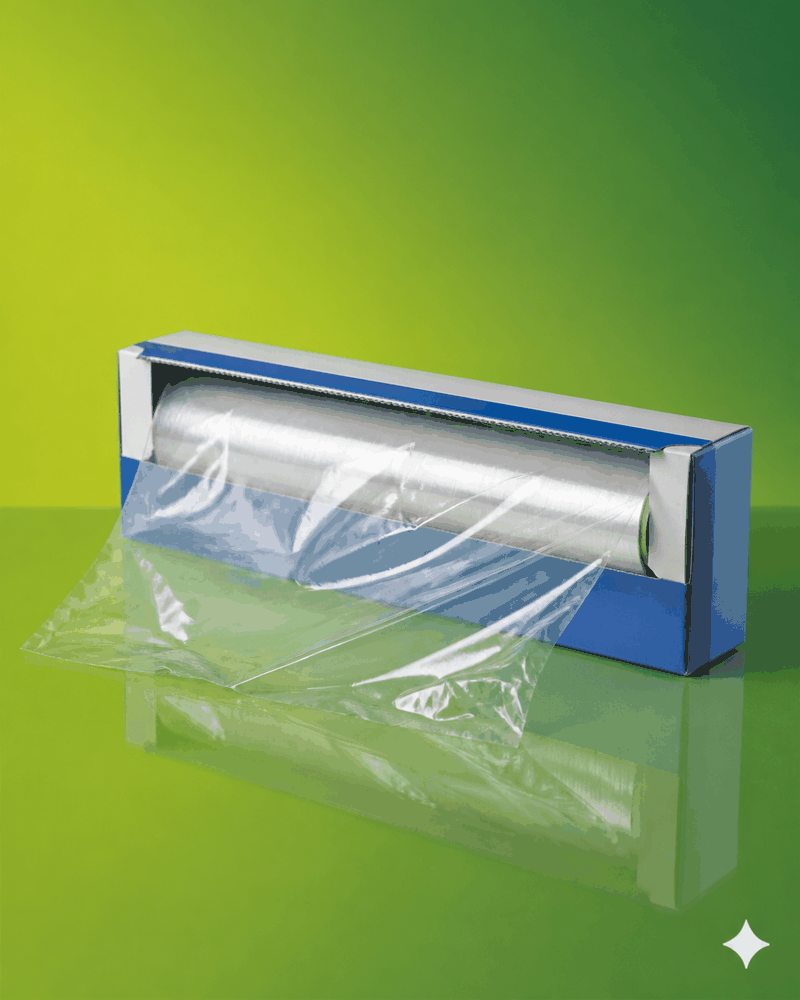 The Problem
 PVC Cling Film
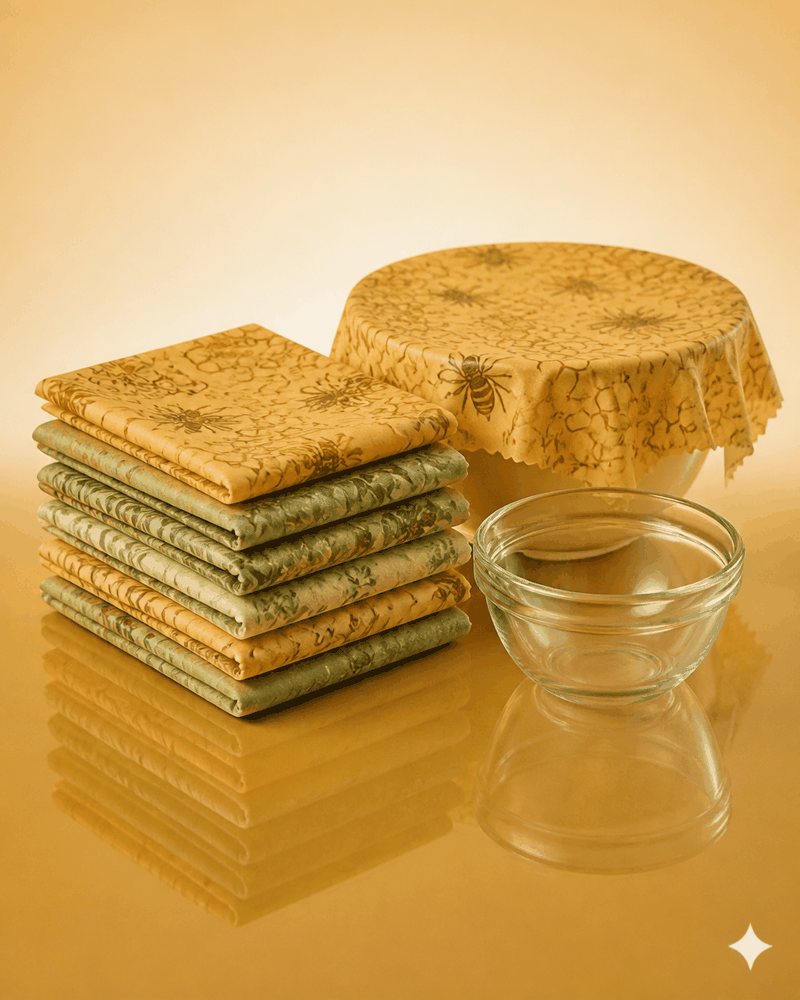 The Solution
 Beeswax Wrap
Beeswax Wrap
Replaces: PVC Cling Film
Shop Now →Why Switch?
Cling film is only stretchy and clingy because a plasticiser has been blended into it. In plasticised PVC film that has historically been DEHA — di-(2-ethylhexyl)adipate — at roughly 20–30% by weight. It is not chemically bonded to the polymer, so it migrates out.
UK government researchers measured exactly how much. A 1987 study in Food Additives & Contaminants tested realistic domestic use and found migration rose with contact time and temperature, was highest where film touched food directly, and was highest of all where that contact surface was fatty. Cheese, cooked meats, cakes, and microwave-cooked food showed the largest transfers; unfilled sandwiches, fruit, and most vegetables showed much less. A companion retail survey the same year analysed 83 wrapped shop-bought foods and found 27.8–135 mg/kg DEHA in cheese and 11–212 mg/kg in baked goods and sandwiches — and found that cooking meat afterwards did not meaningfully reduce what had already migrated in.
The pattern worth remembering is simple: fat, heat, direct contact, and time. Those four conditions are what drive transfer, and a block of cheese wrapped tight for a week hits all of them.
Separately, phthalates such as DEHP reach food from many plastic and PVC contact points across the supply chain, not primarily from cling film. A review in Environmental Health found consistently high DEHP in poultry, cooking oils, and cream-based dairy, and estimated dietary intakes for infants that exceeded the then-current EPA reference dose. A 2022 analysis in the Journal of Exposure Science & Environmental Epidemiology detected DEHP in 70% of US fast-food samples and found food-handling gloves that were 28–37% plasticiser by weight. The US EPA’s hazard assessment for DEHP identifies the developing male reproductive tract as the most sensitive endpoint. That is a real concern about the food system, but it is a DEHP concern — do not read it as a statement about DEHA in your cling film, since they are different chemicals with different hazard profiles.
What Makes It Better
Beeswax wrap is cotton infused with beeswax, tree resin, and jojoba oil. There is no plasticiser in it because it does not need one — the tack comes from the wax, which softens with hand warmth and firms up in the fridge. For covering a bowl, wrapping bread, or keeping half a cucumber, it does the job with no plasticiser interface and no daily roll of single-use film.
Be clear about what the evidence does and does not support, though. A 2021 University of Montana study compared beeswax wraps against wax paper and plastic bags for spoilage of strawberries, bread, and cheese over 15 days and found no advantage for beeswax — in the minority of comparisons that differed significantly, beeswax actually fared worst. So the honest case for wax wrap is avoiding the plasticiser and cutting waste, not better food preservation.
For the high-migration cases the research actually flags — fatty foods, long storage, anything hot or microwaved — the better-evidenced answer is glass. A dietary intervention study in Environmental Health Perspectives had families eat fresh food stored in glass and stainless steel for three days, and their urinary DEHP metabolites fell by 53–56% and BPA by 66%. That is human biomonitoring evidence that changing the storage interface changes what ends up in you, and it is why a couple of glass containers alongside your wax wraps is the version of this swap that actually pays off.
Honest Caveats
Beeswax wrap has a genuine hygiene limitation: you cannot wash it in hot water without melting the wax, so it cannot be properly sanitised. Testing has found microbial growth and failing surface-cleanliness readings on used wraps, with older wraps worse. Keep it away from raw meat, raw fish, and food for infants or anyone immunocompromised — use glass or stainless steel for those. It is not microwave or oven safe. If you are vegan, look for candelilla or soy wax versions.
Two things to keep in perspective. First, not every cling film is PVC — many are polyethylene, so check what you actually own before assuming. Second, this migration is regulated rather than unregulated: EU Regulation 10/2011 sets migration limits for plastic food-contact materials, and Regulation 2023/1442 tightened the phthalate limits further. The older studies above measured older films against older limits.
Key Benefits
- No plasticiser interface against fatty food, where transfer is highest
- Cuts out a daily single-use plastic entirely
- Reusable for around a year, then refreshable with a warm iron
- Compostable at end of life
- Seals with hand warmth — no dispenser, no tangling, no cutting edge
- Paired with glass for fatty, hot, or long-stored food, addresses the cases the research actually flags
The Research
- Startin J.R., et al. (1987). “Migration from plasticized films into foods. 1. Migration of di-(2-ethylhexyl)adipate from PVC films during home-use and microwave cooking.” Food Additives & Contaminants. — pubmed.ncbi.nlm.nih.gov/3678526
- Castle L., et al. (1987). “Migration from plasticized films into foods. 2. Migration of di-(2-ethylhexyl)adipate from PVC films used for retail food packaging.” Food Additives & Contaminants. — doi.org/10.1080/02652038709373648
- Serrano S.E., et al. (2014). “Phthalates and diet: a review of the food monitoring and epidemiology data.” Environmental Health. — pmc.ncbi.nlm.nih.gov/articles/PMC4050989
- Edwards L., et al. (2022). “Phthalate and novel plasticizer concentrations in food items from U.S. fast food chains: a preliminary analysis.” Journal of Exposure Science & Environmental Epidemiology. — nature.com/articles/s41370-021-00392-8
- Rudel R.A., et al. (2011). “Food Packaging and Bisphenol A and Bis(2-Ethyhexyl) Phthalate Exposure: Findings from a Dietary Intervention.” Environmental Health Perspectives. — pmc.ncbi.nlm.nih.gov/articles/PMC3223004
- Beck D.E., et al. (2021). “Food spoilage in beeswax impregnated cotton cloth wraps compared to standard storage methods.” University of Montana ScholarWorks. — scholarworks.umt.edu/beekeeping/1
- US Environmental Protection Agency (2025). “Non-cancer Human Health Hazard Assessment for DEHP.” US EPA TSCA technical support document. — epa.gov