
Wooden Toys
Replaces: Plastic Toys
 The Problem
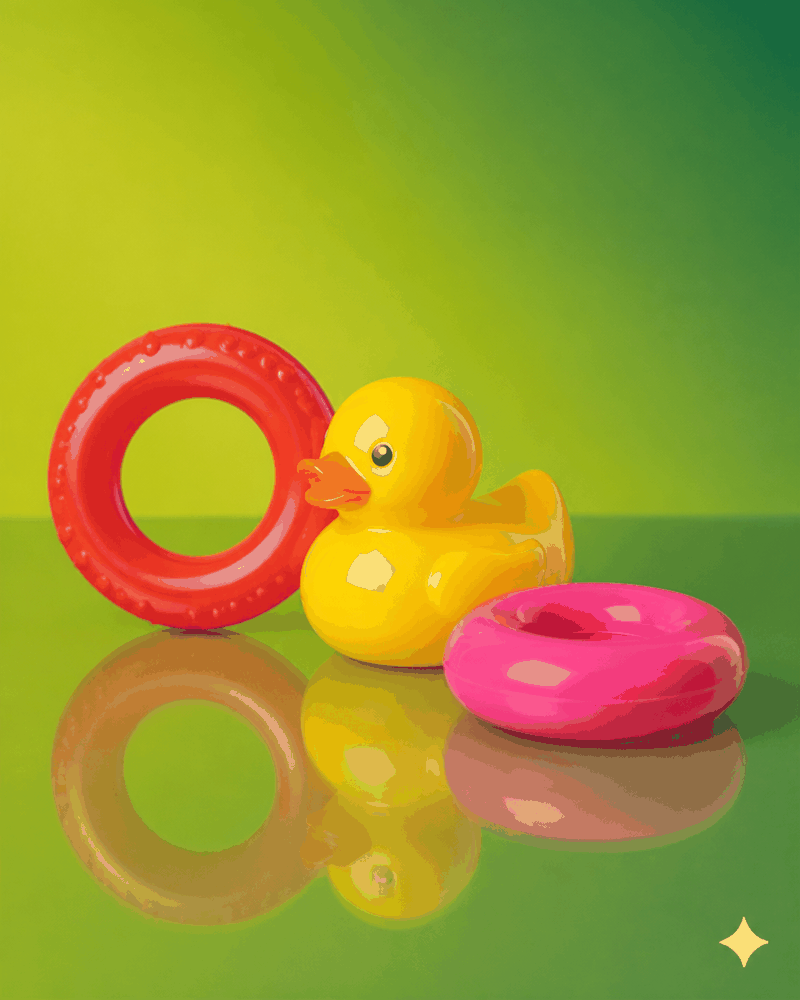
 Plastic Toys
 The Solution
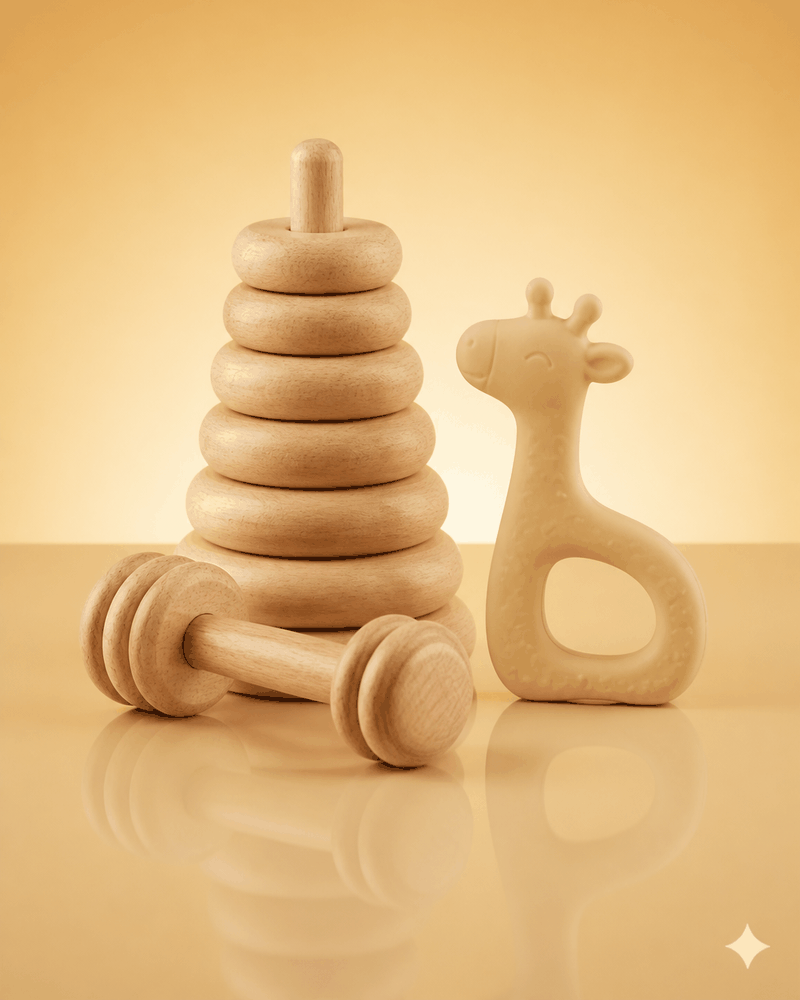
 Wooden Toys
Wooden Toys
Replaces: Plastic Toys
Shop Now →Why Switch?
Small children mouth things. It is normal developmental behaviour and it makes toys a genuine exposure route, because saliva and chewing extract chemicals from a surface far more effectively than touching it does.
The recycling problem is the most surprising part of the evidence. A study in Environment International examined the downsides of the recycling process and found harmful organic chemicals — including brominated flame retardants — in children’s toys, having arrived there via recycled plastic sourced from electronic waste. Earlier work in Environmental Science & Technology had found brominated flame retardants in toys and assessed the resulting exposure risk to children. These compounds were never intended for toys; they came from the casings of old televisions and computers and were carried along when that plastic was reprocessed. Black and dark grey plastic is the usual culprit, because it hides the mixed origins of the feedstock.
Heavy metals are a parallel issue. Research in Environmental Science & Technology measured hazardous elements in second-hand children’s plastic toys and found concentrations and migration rates of elements including lead, cadmium, chromium, and bromine that in a number of cases exceeded EU Toy Safety Directive limits. Second-hand and hand-me-down toys are the higher-risk group, since they predate current limits — and they are exactly what gets passed between families.
Phthalates are regulated in toys in both the EU and the US, but enforcement relies on market surveillance, and imported and novelty items bought through online marketplaces are routinely found non-compliant.
What Makes It Better
Solid hardwood is one material, and you can see what it is. There is no plasticiser to migrate, no flame retardant, no recycled feedstock of unknown origin. With an untreated surface or a certified natural oil or beeswax finish, a toy a child chews on is wood and wax. Maple, beech, and birch are dense enough to resist splintering.
The play research points the same direction. A study in JAMA Pediatrics compared electronic toys, traditional toys, and books during parent-infant play and found that electronic toys were associated with less adult talk, fewer adult words, fewer conversational turns, and less parental response than traditional toys or books. The toy doing the talking means the parent does not. Open-ended wooden toys — blocks, shapes, simple figures — put the imaginative work back on the child, which is also why they hold attention across a much wider age range than a single-function plastic toy that has one trick.
Then there is durability, which is where wood wins outright. Wooden blocks survive being thrown, stepped on, and chewed for decades and can be sanded and re-oiled. Plastic cracks into sharp fragments, and battery-powered toys die with their batteries.
Honest Caveats
The finish matters more than the wood. Look for EN 71-3 or ASTM F963 compliance on paints and coatings, and prefer plant-based oils or beeswax; a cheap wooden toy with an unspecified lacquer is not obviously better than good plastic. Wooden toys cost more per item and there are fewer of them, which is part of the point but is a real adjustment. Avoid small wooden parts for under-threes, and check for splinters as toys age. Do not throw out perfectly good plastic toys on principle — that is waste for its own sake. Retire the ones worth retiring: anything black or dark grey and unbranded, anything soft and vinyl-smelling, damaged or cracked items, and older hand-me-downs of unknown origin, especially the ones that get mouthed.
Key Benefits
- No plasticisers, brominated flame retardants, or recycled e-waste plastic
- Avoids the heavy metals repeatedly found in plastic and second-hand toys
- Safe for mouthing when finished with certified natural oil or beeswax
- Encourages more parent-child conversation than electronic toys
- Open-ended play holds a child’s interest across a much wider age range
- Survives decades of hard use and can be sanded and re-oiled
- No batteries, and biodegradable at end of life
The Research
- Ionas A.C., Dirtu A.C., Anthonissen T., et al. (2014). “Downsides of the recycling process: Harmful organic chemicals in children’s toys.” Environment International.
- Turner A. (2018). “Concentrations and Migratabilities of Hazardous Elements in Second-Hand Children’s Plastic Toys.” Environmental Science & Technology.
- Chen S.J., Ma Y.J., Wang J., et al. (2009). “Brominated flame retardants in children’s toys: concentration, composition, and children’s exposure and risk assessment.” Environmental Science & Technology.
- Sosa A.V. (2016). “Association of the Type of Toy Used During Play With the Quantity and Quality of Parent-Infant Communication.” JAMA Pediatrics.
- European Parliament Directive 2009/48/EC. “Safety of toys (Toy Safety Directive).”