
Wool Dryer Balls
Replaces: Fabric Softener & Dryer Sheets
 The Problem
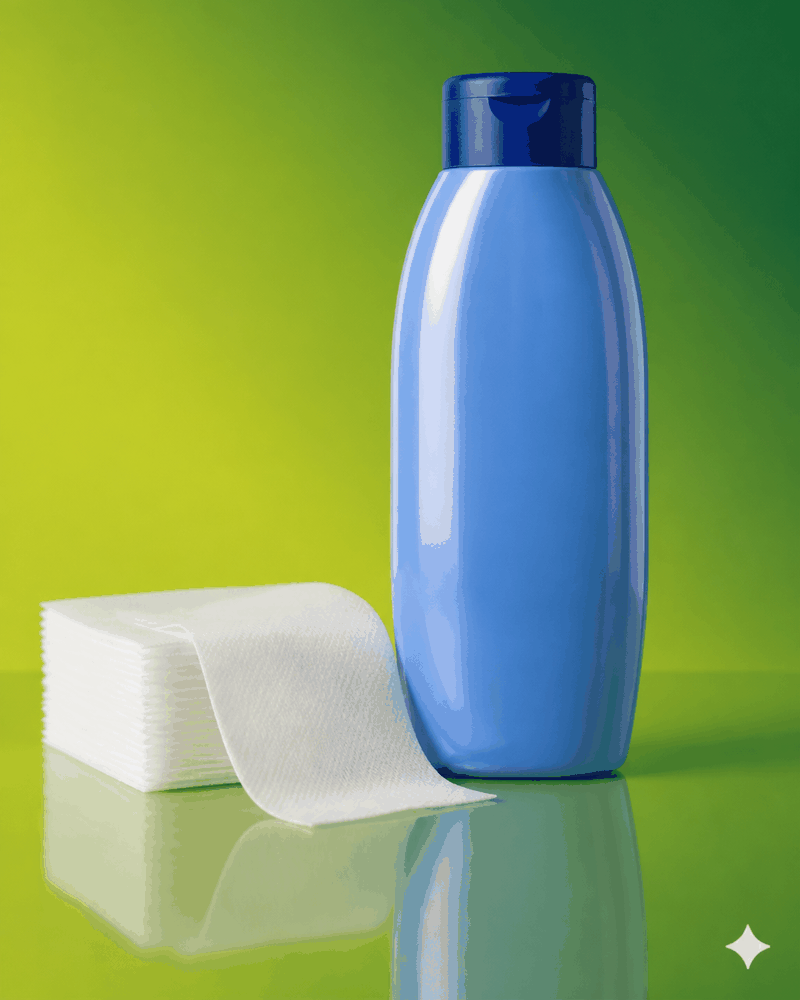
 Fabric Softener & Dryer Sheets
 The Solution
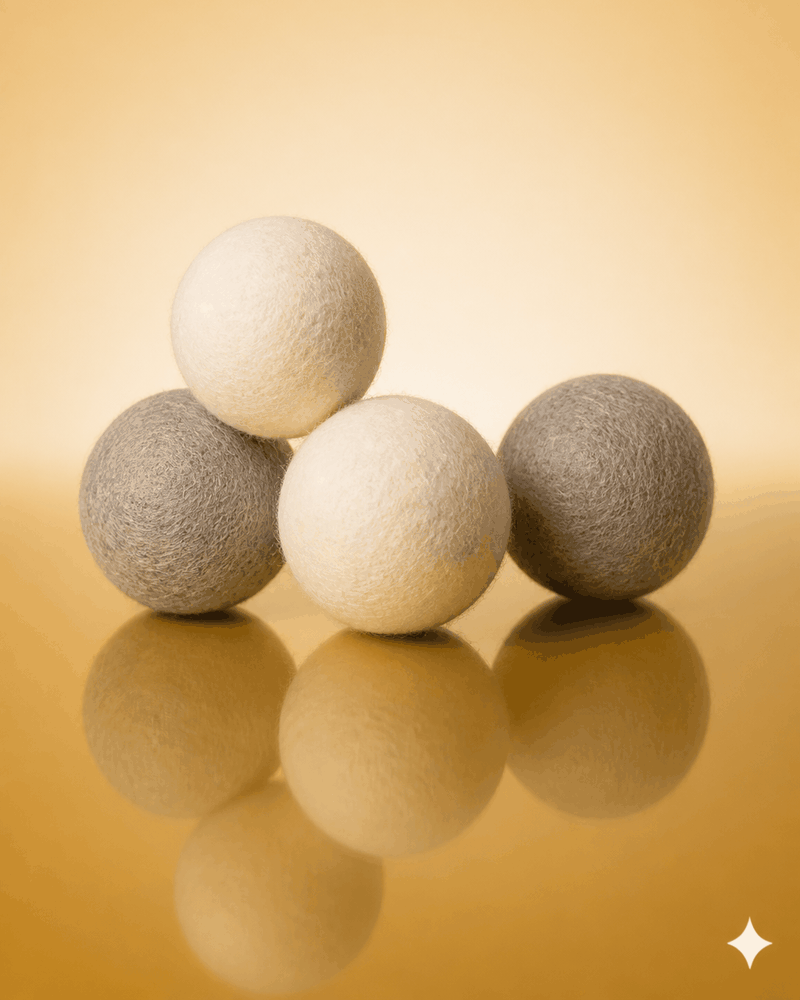
 Wool Dryer Balls
Wool Dryer Balls
Replaces: Fabric Softener & Dryer Sheets
Shop Now →Why Switch?
Fabric softener does not clean or condition anything. It deposits a waxy cationic film on the fibres so they slide past each other, and that film is built from quaternary ammonium compounds — “quats” — carrying a heavy fragrance load. The film is designed to survive the wash and stay on the fabric that then sits against your skin all day.
The emissions side is well documented. A study in Air Quality, Atmosphere & Health sampled the air coming out of residential dryer vents while scented detergent and dryer sheets were in use, and identified more than 25 volatile organic compounds, including acetaldehyde and benzene — both classified as hazardous air pollutants with no established safe exposure level. None of these appeared on any product label, because fragrance mixtures are protected as trade secrets. Your dryer vent is, functionally, an unregulated chimney.
The quats themselves have their own literature. Research in Reproductive Toxicology found that mice exposed to common quaternary ammonium compounds showed decreased fertility, and work published in Birth Defects Research reported neural tube defects in rodents following both dosed and ambient exposure. Quats are also recognised respiratory sensitisers associated with occupational asthma, and their widespread use as antimicrobials raises resistance concerns.
There is a safety angle people rarely hear: fabric softener coats flame-resistant children’s sleepwear and degrades its flame resistance. Manufacturers of those garments explicitly warn against it.
What Makes It Better
Wool dryer balls do the same job through physics rather than chemistry. They tumble between layers of laundry, physically separating garments so hot air circulates instead of tunnelling around a wet clump. That agitation is what softens fibres and knocks down static and wrinkles — no coating required.
Because the load dries more evenly, it dries faster. Most households see drying times drop by roughly 10–25%, which is a real cut in energy use and in the heat stress that shortens the life of your clothes. And without a film sealing the fibres, towels go back to being absorbent — softener is the reason your towels started pushing water around instead of soaking it up, and the reason athletic fabrics stop wicking.
A set of six balls costs less than a few months of softener and lasts several years. If you want scent, a couple of drops of essential oil on a ball before the cycle gives you a light, known fragrance instead of an undisclosed mixture.
Honest Caveats
Wool balls are not vegan; if that matters, moulded plastic-free alternatives exist, though they are noisier and less effective. They are also slightly audible — a soft thumping for the first few minutes. Static can increase on fully synthetic loads, which is usually fixed by not over-drying, since static is a symptom of bone-dry fabric. And if you have a genuine wool allergy, skip them.
Key Benefits
- No quaternary ammonium compounds left sitting against your skin
- No undisclosed fragrance chemicals vented from your dryer
- Cuts drying time by roughly 10–25%, saving energy
- Towels regain full absorbency and activewear wicks properly again
- Does not compromise the flame resistance of children’s sleepwear
- Lasts several years; replaces hundreds of single-use sheets
- Costs a fraction of ongoing softener purchases
The Research
- Steinemann A.C., Gallagher L.G., Davis A.L., MacGregor I.C. (2013). “Chemical emissions from residential dryer vents during use of fragranced laundry products.” Air Quality, Atmosphere & Health.
- Melin V.E., Potineni H., Hunt P., et al. (2014). “Exposure to common quaternary ammonium disinfectants decreases fertility in mice.” Reproductive Toxicology.
- Hrubec T.C., Melin V.E., Shea C.S., et al. (2017). “Ambient and Dosed Exposure to Quaternary Ammonium Disinfectants Causes Neural Tube Defects in Rodents.” Birth Defects Research.
- Steinemann A. (2016). “Fragranced consumer products: exposures and effects from emissions.” Air Quality, Atmosphere & Health.
- Steinemann A.C. (2009). “Fragranced consumer products and undisclosed ingredients.” Environmental Impact Assessment Review.