
Menstrual Cup
Replaces: Conventional Tampons & Pads
 The Problem
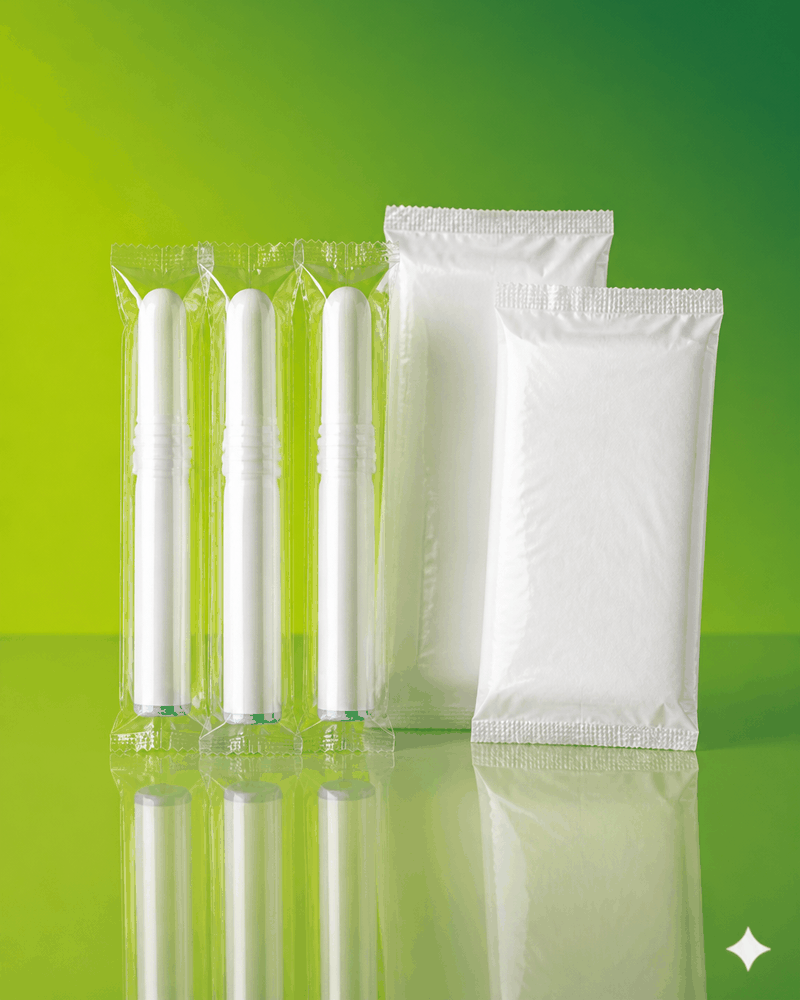
 Conventional Tampons & Pads
 The Solution
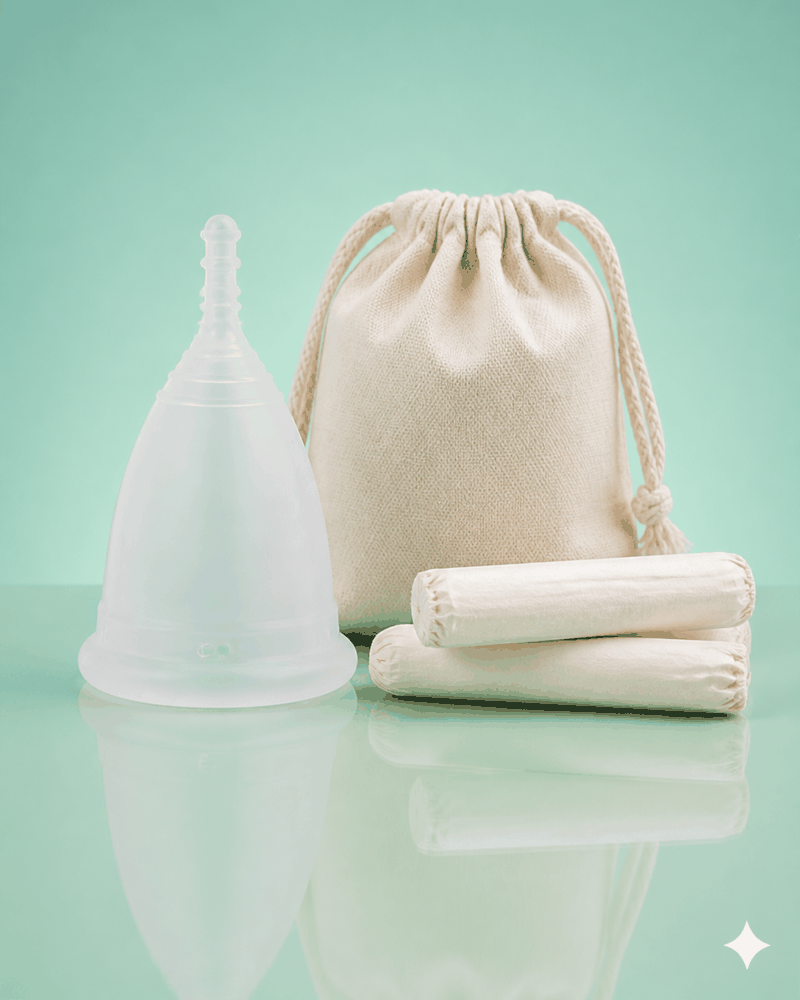
 Menstrual Cup
Menstrual Cup
Replaces: Conventional Tampons & Pads
Shop Now →Why Switch?
The exposure route is what makes this category different. Vaginal tissue is highly vascularised and permeable, and unlike anything you swallow, what is absorbed there enters the bloodstream directly without passing through the liver first. There is no first-pass metabolism to break things down. A product worn internally for hours at a time, several days a month, for decades, deserves more scrutiny than it gets.
In 2024, researchers from UC Berkeley and Columbia published a study in Environment International measuring 16 metals across 30 tampon products from 14 brands. They detected every one of the 16 metals in at least some samples — including lead, arsenic, and cadmium — and found measurable lead in every single product tested. Organic tampons were not cleaner across the board; they had higher arsenic and lower lead. This was a first-of-its-kind study and it measured content rather than how much actually crosses into the body, so the exposure question remains genuinely open. But finding lead in 100% of samples of an internally worn product is a reasonable reason to act now.
Dioxins and furans are a longer-standing concern, arising from the chlorine bleaching of wood pulp and cotton; an exposure assessment in Environmental Health Perspectives examined these residues in tampons and diapers. More recent work has detected PFAS in menstrual products, and research in the Journal of Women’s Health found associations between feminine hygiene product use and circulating volatile organic compound levels. On top of the chemistry, tampons carry a real if rare risk of toxic shock syndrome, and they absorb natural moisture along with blood, which disrupts vaginal flora.
What Makes It Better
A menstrual cup is a single piece of medical-grade silicone. It collects rather than absorbs, so it does not dry out vaginal tissue or disturb the microbiome, and silicone of this grade is inert and non-porous — the same material used in implantable and surgical devices.
The clinical evidence is unusually good for this category. A systematic review and meta-analysis published in The Lancet Public Health in 2019 pooled 43 studies and found that menstrual cups were as effective as or better than tampons and pads at preventing leakage, with no increased risk of infection, no adverse effects on vaginal flora, and no reported safety concerns beyond a handful of manageable issues. That is a strong safety record.
The practical wins are substantial. A cup holds roughly three times what a regular tampon does, so it can be worn up to 12 hours, which usually means overnight and a full workday without a thought. One cup lasts up to ten years, replacing something on the order of 2,500 disposable products — several hundred pounds or dollars saved, and a large amount of waste avoided.
Honest Caveats
There is a learning curve, and it is real — most people need two or three cycles to get insertion, the fold, and the seal right, and the first attempts can be frustrating. Sizing matters and depends on cervix height and whether you have given birth. It needs boiling between cycles to sterilise, and emptying it in a public restroom is awkward. It is not recommended with an IUD without asking your doctor first, since suction can theoretically dislodge the strings. If a cup does not suit you, period underwear or organic cotton products from brands that publish third-party testing are reasonable middle grounds — though check PFAS testing on period underwear specifically.
Key Benefits
- No contact with materials found to contain lead, arsenic, and cadmium
- Avoids dioxin residues from chlorine bleaching and PFAS in product layers
- Collects rather than absorbs, so vaginal moisture and flora stay intact
- Backed by a Lancet Public Health meta-analysis of 43 studies showing equal or better leak protection and no infection increase
- Up to 12 hours of wear — overnight and a full workday
- One cup replaces roughly 2,500 disposables over up to ten years
- Very large cost saving and waste reduction over its lifetime
The Research
- Shearston J.A., Upson K., Gordon M., et al. (2024). “Tampons as a source of exposure to metal(loid)s.” Environment International.
- van Eijk A.M., Zulaika G., Lenchner M., et al. (2019). “Menstrual cup use, leakage, acceptability, safety, and availability: a systematic review and meta-analysis.” The Lancet Public Health.
- DeVito M.J., Schecter A. (2002). “Exposure assessment to dioxins from the use of tampons and diapers.” Environmental Health Perspectives.
- Ding N., Batterman S., Park S.K. (2020). “Exposure to Volatile Organic Compounds and Use of Feminine Hygiene Products Among Reproductive-Aged Women in the United States.” Journal of Women’s Health.
- Nicole W. (2014). “A question for women’s health: chemicals in feminine hygiene products and personal lubricants.” Environmental Health Perspectives.