
Glass French Press
Replaces: Plastic French Press
 The Problem
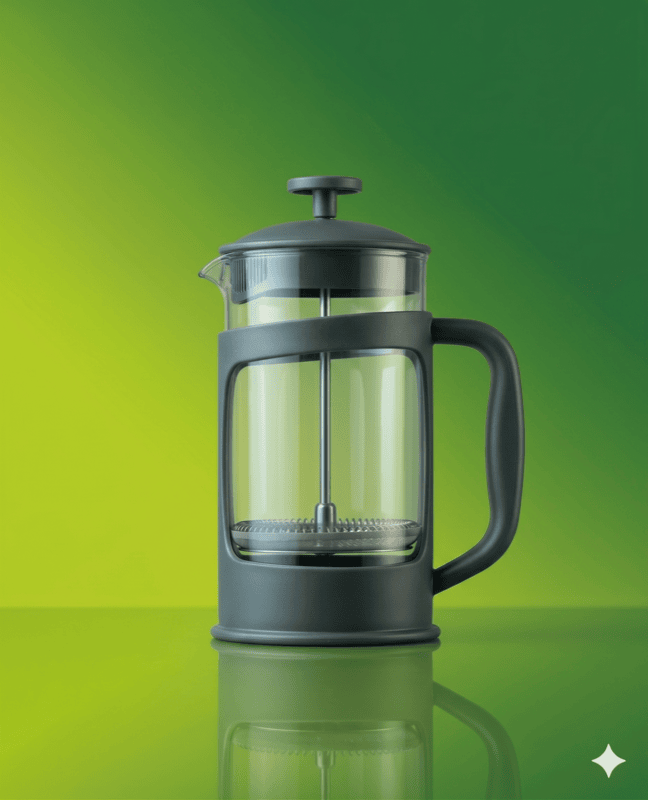
 Plastic French Press
 The Solution
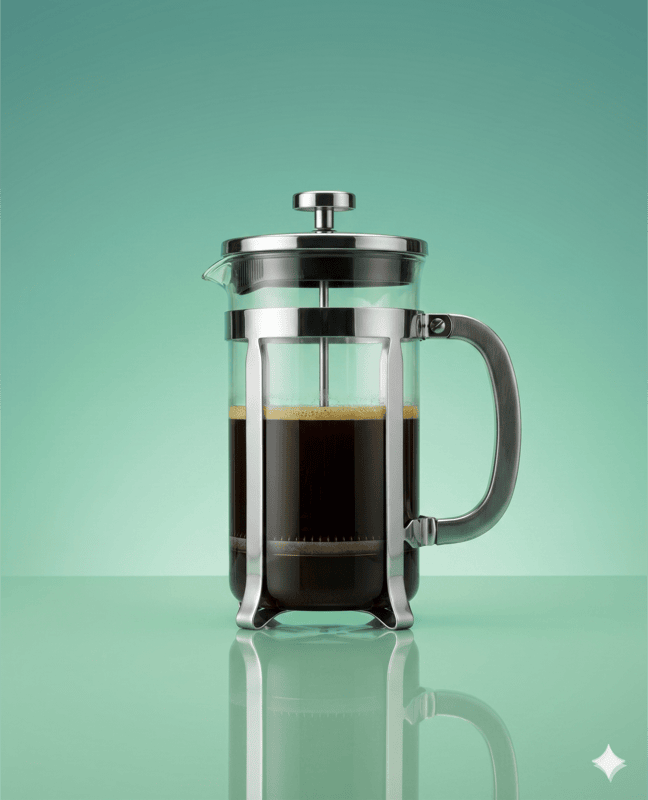
 Glass French Press
Glass French Press
Replaces: Plastic French Press
Shop Now →Why Switch?
A French press involves steeping coffee grounds in near-boiling water for several minutes — creating prolonged contact between hot liquid and the container walls. When that container is made of plastic, the heat accelerates the release of microplastics, BPA, and other chemical compounds directly into your coffee. The acidity of coffee further increases this chemical leaching, making plastic French presses one of the worst offenders in the kitchen.
Over time, plastic carafes also absorb coffee oils and stains, becoming difficult to clean thoroughly. These residual oils turn rancid, affecting the taste of your coffee and creating a breeding ground for bacteria in micro-scratches on the surface.
What Makes It Better
A borosilicate glass French press is completely non-reactive. The glass won’t interact with your coffee regardless of temperature or acidity, preserving the true flavour profile of your beans. Borosilicate glass is specifically engineered to withstand rapid temperature changes, so it won’t crack when you pour in boiling water.
The smooth, non-porous surface of glass doesn’t absorb oils, stains, or odours, making it easy to clean and ensuring every brew tastes as fresh as the first. Paired with a stainless steel plunger and mesh filter, a glass French press eliminates plastic contact entirely from the brewing process.
Key Benefits
- Zero chemical leaching — glass is completely inert with hot liquids
- Preserves the full, authentic flavour of your coffee
- Borosilicate glass withstands boiling water and thermal shock
- Non-porous surface resists stains, odours, and bacterial buildup
- Easy to see brew strength through the clear glass
- Stainless steel filter and frame for a fully plastic-free experience