
Wooden Chopping Board
Replaces: Plastic Chopping Board
 The Problem
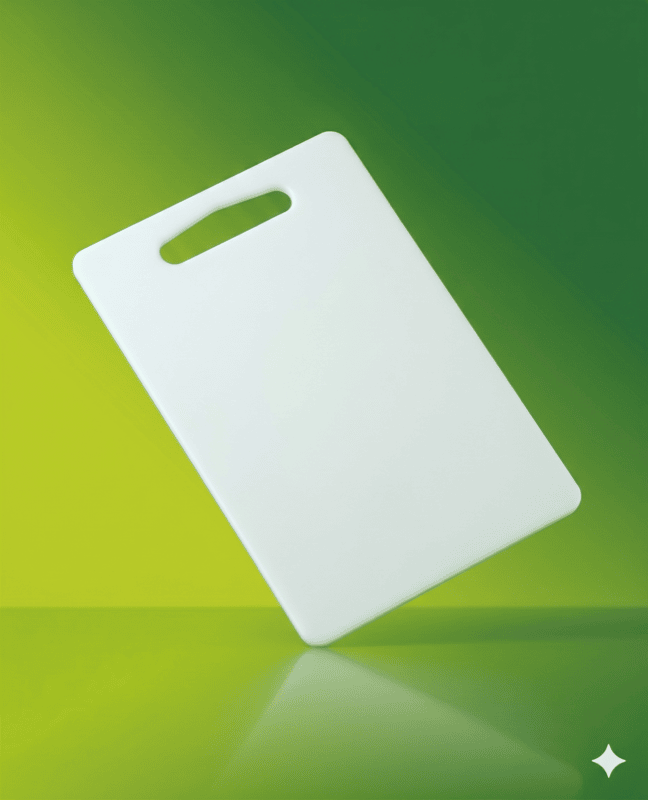
 Plastic Chopping Board
 The Solution
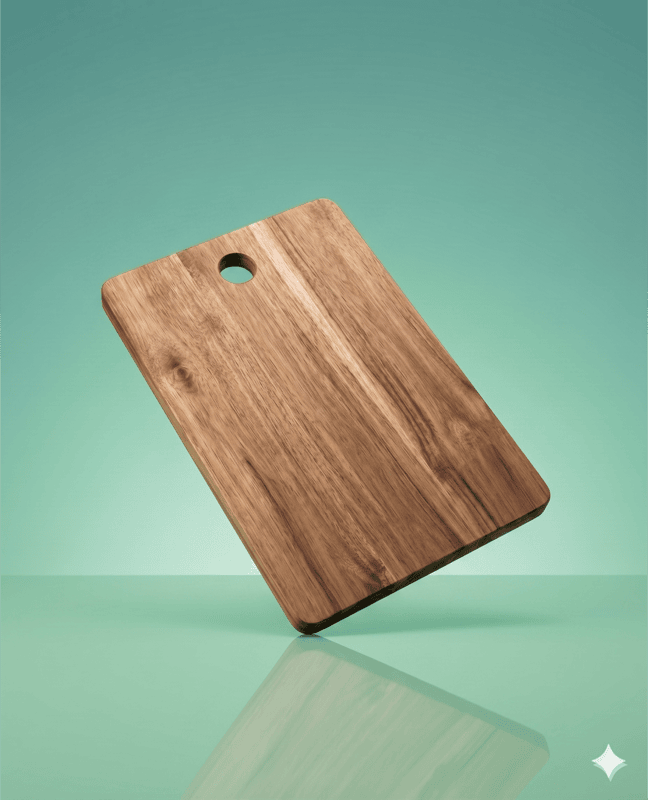
 Wooden Chopping Board
Wooden Chopping Board
Replaces: Plastic Chopping Board
Shop Now →Why Switch?
Every time you cut on a plastic chopping board, the knife creates tiny grooves that release microplastic particles directly onto your food. A study published in Environmental Science & Technology found that a single plastic board can release tens of millions of microplastic particles per year through normal use. These particles are small enough to be ingested and have been detected in human blood and organs.
Beyond microplastics, the grooves in plastic boards harbour bacteria that are difficult to remove even with thorough washing, making them a hidden hygiene concern in your kitchen.
What Makes It Better
Wooden chopping boards have natural antibacterial properties — studies have shown that bacteria drawn into the wood grain die off within hours, while bacteria on plastic surfaces can survive and multiply in knife scars. Hardwoods like maple, walnut, and beech are dense enough to resist deep cuts while being gentle on knife edges, keeping your blades sharper for longer.
A quality wooden board is also far more durable. With occasional oiling, it can last decades and actually improves with age, developing a rich patina rather than the scarred, stained surface that plastic boards develop.
Key Benefits
- Zero microplastic contamination of your food
- Natural antibacterial properties kill bacteria trapped in the grain
- Gentler on knife edges, keeping blades sharper
- Extremely durable — lasts decades with basic care
- Can be sanded and refinished when surface becomes worn
- Biodegradable and sustainably sourced